Family, wine and the soul of Emilia, since 1860.
The history of Chiarli is not just a sequence of dates and milestones. It is an interweaving of people, intuitions, and a deep bond with the land. Since 1860, every generation has left its mark — preserving tradition while always taking a step forward. Chiarli is still a family-run business today. The group's headquarters are at the historic winery in Via Manin, where Chiarli Modena wines are produced from grapes sourced through long-standing relationships with local growers and cooperatives.
In 2000, a decisive step was taken to enhance the quality of the grapes from our own vineyards: a winery was built at Tenuta Cialdini in Castelvetro di Modena. That same year, production began of Cleto Chiarli Lambrusco, dedicated exclusively to restaurants and wine shops. Ten years later, a courageous experiment with the classic method led to the birth of Quinto Passo Metodo Classico — the highest expression of our Sorbara. Tenuta Cialdini in Castelvetro di Modena. In the same year, production of Lambrusco under the brand name began Cleto Chiarli, dedicated exclusively to the world of restaurants and wine bars. Ten years later, a brave experiment with the classic method led to the birth of Fifth Step Classic Method – the highest expression of our Sorbara.
Stories that intertwine.
The history of Lambrusco, and of wine in general, runs in parallel with that of the Chiarli family. Two distinct paths that often cross along the way. In this timeline you will find some of the most significant moments of both stories. On the left, events linked to the world of wine and Lambrusco. On the right, those concerning the Chiarli family and company.
In this timeline, you'll find some of the most significant moments from both stories. On the left are the events related to the world of wine and Lambrusco. On the right are those concerning the Chiarli family and company.
The history of wine
1567
The first glass furnace opens in Modena, giving rise to a very important production of blown glass.

1583
Editorial Office of the Parish of San Cesario sul Panaro.

1652
Sir Kenelm Digby invented the English Bottle, which enabled wines to be carbonated in the bottle.

1789
Antoine-Laurent de Lavoisier discovers the mechanisms of wine fermentation.

The history of wine
The Chiarli Family
1840-1867
The different varieties of Lambrusco are defined.

1860 – Opening of the Trattoria dell’Artigliere, Modena
Before becoming a winemaker, Cleto Chiarli moved with his wife Lucia and children to Modena, where he opened a trattoria with rooms and a shop in the historic centre. Here, his Lambrusco, produced in the adjacent cellar, quickly gained local appreciation.

1860 - Opening of the wine cellar at the “Trattoria de l’Artigliere”
Alongside the Trattoria, Cleto obtains official permission to build a wine cellar to serve the trattoria, in order to meet the growing demand for his wines. This is the beginning of Chiarli as a producer and the modern history of Lambrusco.

1860 – Introduction of the Mushroom Stopper
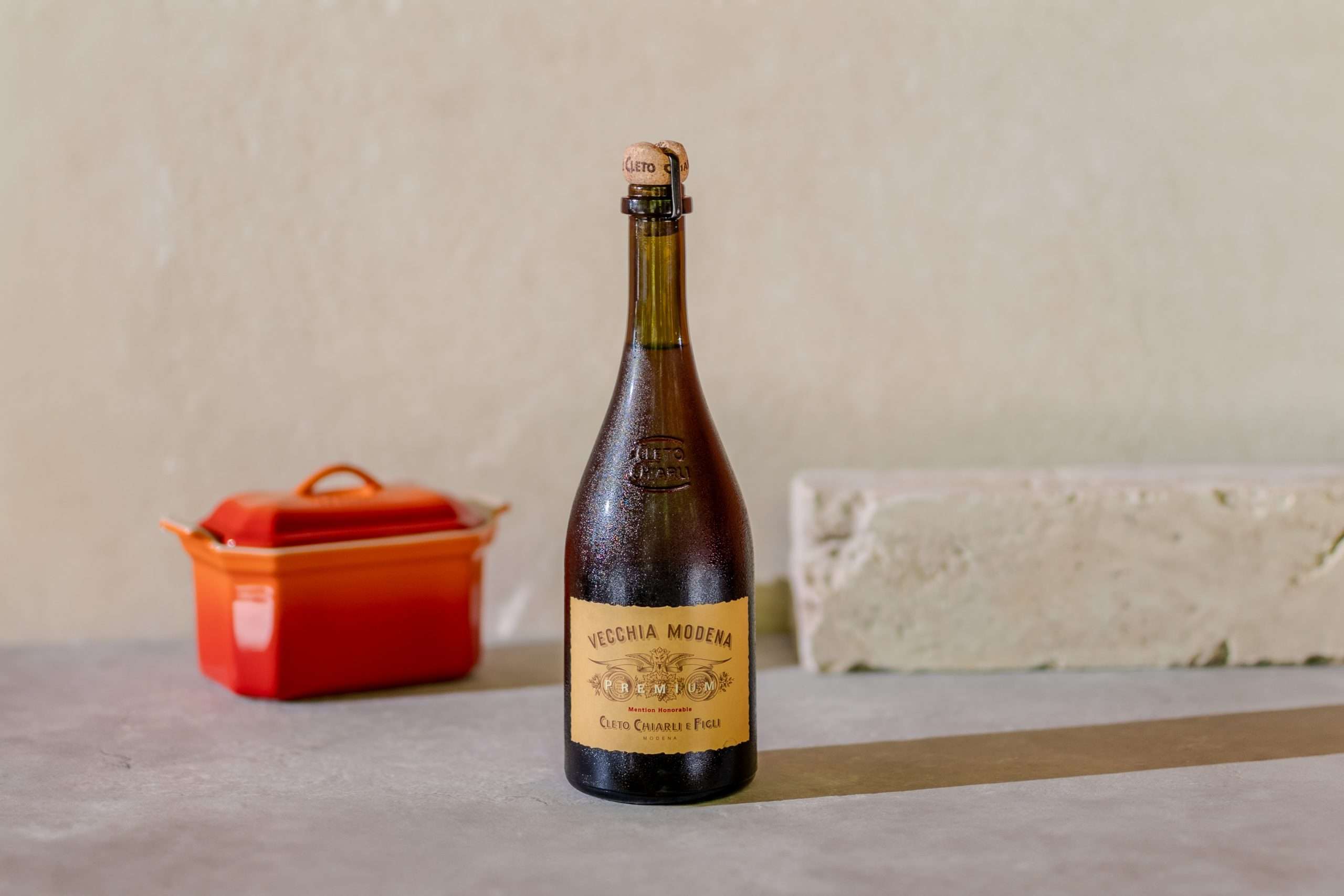
To best preserve the liveliness of Lambrusco, Cleto introduced the mushroom cork, an absolute novelty for the time that anticipated the bubbly spirit of the Modenese wine.

1880–1885 – Anselmo Chiarli, second generation
With Anselmo, son of Cleto, the company grew and became more structured. This was the period when the family began to collaborate with the province's first Wine Cooperatives, contributing to the local wine-growing landscape.

1885 – First exports of Chiarli Lambrusco
Chiarli Lambrusco crosses national borders, accompanying Modenese and Italian emigrants around the world. The wine becomes a symbol of Emilia even abroad.

1888 – Opening of the winery on Via Poletti
To cope with growing demand, Chiarli built a new, larger winery on Via Poletti: a move that marked the company's expansion and modernisation.

1895 - 1910
Federico Martinotti and Eugène Charmat perfect the pressurised tank method of winemaking.

1898 – Acquisition of Villa Cialdini
The Chiarli family acquires Villa Cialdini, the historic residence of General Enrico Cialdini – a central figure of the Italian Risorgimento – and its grounds, laying the foundations for one of the most representative estates of Grasparossa di Castelvetro and the future Cleto Chiarli Tenute Agricole project.

The history of wine
The Chiarli Family
1900 – The first bottle cap sealing machines
The company equips itself with cutting-edge technologies for the time, introducing the first machines for capping bottles: a more modern and safer production is born.

1900 – "Honourable Mention" at the Paris Universal Exhibition and production exceeds 100,000 bottles.
Chiarli wins an award at the Paris Expo and annual production exceeds 100,000 bottles: an exceptional milestone for the time, especially for a delicate wine like Lambrusco.

1924 – Opening of the new winery in Via Manin
In Modena, on Via Manin, a new state-of-the-art facility is inaugurated, intended to remain the company's headquarters and production heart for generations.

1944 - Bombing of the Chiarli winery
During the Second World War, the cellar on Via Manin suffered severe damage as a result of bombings, and some young employees who had gone to the front did not return: a dramatic moment in the company's history.

1947 – Reconstruction of the cellar on Via Manin
In the post-war period, the plant was rebuilt and modernised, marking a significant rebirth for Chiarli and the city of Modena.

1946 – Giovanni and Giorgio Chiarli, third generation
After the war, brothers Giovanni and Giorgio relaunched the company with courage and vision, carrying on the family tradition and paving the way for the large numbers of the economic boom.

1952 – Prime autoclaves in Emilia-Romagna
Chiarli is the first company to introduce autoclaves in the region, adopting the Charmat Method to produce sparkling wines in a controlled manner, with superior quality results.

1963
The Denominations of Origin Controlled classification system is born.

1970
The Lambrusco Sorbara, Grasparossa and Salamino varieties obtain Denominations of Controlled Origin.

1970 – Start of mass selection study
The work of recovering and selecting historical clones of Sorbara and Grasparossa begins, to preserve the authentic identity and quality of Lambrusco.

1972 – New installations with GDC system
Modern GDC (Geneva Double Curtain) training systems are being adopted, which ensure healthier grapes and more balanced ripening in the Emilia vineyards.

1968–1975 – Mauro and Anselmo Chiarli
With the fourth generation in the company, a phase of renewal begins: mass selection of Lambrusco varieties is initiated and new vineyard management techniques are introduced.

1980 – Launch of Old Modena Brut
During the Assoenologi National Congress, Vecchia Modena, a refined and modern Brut Lambrusco Sorbara, is presented, symbolising a new era for quality Lambrusco.

The history of wine
The Chiarli Family
2000–2017 – Carlo and Tommaso Chiarli
The fifth generation carries forward the family dream: Cleto Chiarli Tenute Agricole and Quintopasso are born, projects dedicated to the territory, excellence, and innovation.

2002 – Opening of Tenuta Cialdini, Castelvetro
The historic estate purchased by the Chiarli family in 1898 becomes the home of a new winery dedicated to the premium production of grapes from their three estates. The wines are presented under the new Cleto Chiarli brand, a tribute to the founder.

2014 – Born Quintopasso Metodo Classico
Quintopasso makes its debut with the Rosé Brut, 100% Sorbara, aged for an extended period on the lees: a Metodo Classico that demonstrates just how noble, elegant and surprising Lambrusco can be.

2025 – Opening of the Chiarli Archive and Chiarli Gallery
The Galleria Chiarli opens at Villa Cialdini, a new exhibition space that houses a curated selection from the historic Chiarli Archive, recognised for its national historical significance.